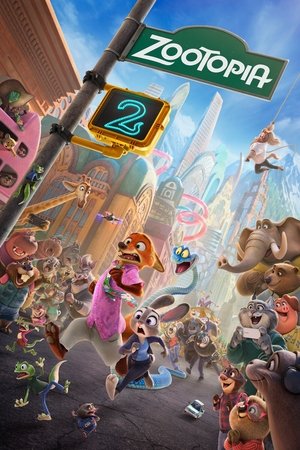
ZOOTOPIA 2(2025)
Written by: Jared Bush
Draft date: Not specified (© 2025 Disney)
Genre: Animation
Title: Zootopia 2
Written by: Jared Bush
Draft date: Not specified (© 2025 Disney)
LOGLINE
A bunny cop and her fox partner, demoted and ridiculed after a botched arrest, go rogue to investigate the appearance of a venomous snake at a high-society gala — only to uncover a century-old conspiracy by the city's founding family to steal credit for the invention that made their metropolis possible.
| Very Poor | Poor | Fair | Good | Excellent | |
|---|---|---|---|---|---|
| PREMISE | ✓ | ||||
| STRUCTURE | ✓ | ||||
| CHARACTER | ✓ | ||||
| CONFLICT | ✓ | ||||
| DIALOGUE | ✓ | ||||
| PACING | ✓ | ||||
| TONE | ✓ | ||||
| ORIGINALITY | ✓ | ||||
| LOGIC | ✓ | ||||
| CRAFT | ✓ |
| Strong Pass | Pass | Consider | Recommend | Strong Recommend | |
|---|---|---|---|---|---|
| Overall | ✓ |
Genre: Comedy, Drama
Sub-genre: Buddy Comedy, Action Adventure, Animated Family
Keywords: Buddy Cops, Conspiracy, Partnership, Found Family, Ensemble Cast, Wrongfully Accused, Fish-Out-Of-Water, Sequel, Animal World, Female Protagonist, Fugitives, Identity, Prejudice, Underdog, Heist (inverse), Redemption, Chase
MPA Rating: PG (mild peril, animated action violence, no profanity beyond light substitutions)
Budget Tier: Ultra High ($100M+) — Feature animation requiring extensive world-building across multiple biomes, large ensemble voice cast, action set pieces including vehicle chases, weather-wall interiors, underwater tube sequences, and elaborate crowd scenes.
Pages: 106
Time Period: Present over approximately 3 days
Locations: Approximately 30% in various Zootopia urban locations (ZPD headquarters, apartments, streets, subway); 15% at the Tundratown Zootennial Gala mansion; 15% in Marsh Market (semi-aquatic waterfront district with docks, sunken ocean liner, water tubes); 10% in Desert Dunes (Bedouin-style camp, Burning Mammal festival); 15% at the desert/Tundratown weather wall interior and rooftop; 10% in the buried Reptile Ravine neighborhood beneath snow; 5% in prison, Lynxley Manor, and miscellaneous interiors. Requires multiple distinct climate biomes within one city, a 1900s historical flashback sequence, and an underground frozen-in-time town.
Lead: Judy Hopps — female, young adult rabbit, small in stature, earnest, driven, overachieving, and prone to hero-complex impulsiveness. Nicholas Wilde — male, young adult fox, streetwise, emotionally guarded, sarcastic, deeply loyal beneath his deflections. Dual protagonists.
Comparables: Zootopia (2016) — direct predecessor, same world and characters, same blend of buddy-cop procedural with social allegory. Toy Story 2 (1999) — animated sequel that deepens its central partnership while introducing a new character whose allegiance is uncertain. The Nice Guys (2016) — mismatched investigative duo whose interpersonal dysfunction is the engine of both comedy and emotion. National Treasure (2004) — historical conspiracy involving a hidden document that rewrites an origin myth.
SYNOPSIS
A recap of the first film's climax re-establishes JUDY HOPPS (young adult), Zootopia's first bunny cop, and NICK WILDE (young adult), her fox partner, as the unlikely duo who exposed Mayor Bellwether's anti-predator conspiracy using a toy carrot recorder pen. Now official partners for one week, they are celebrated but scrutinized. MAYOR WINDDANCER (adult), a former actor, hails them during the city's Zootennial — the 100th anniversary of the weather walls that let all animals coexist.
At the ZPD, CHIEF BOGO (adult) assigns a customs-smuggling bust to veteran teams led by CAPTAIN HOGGBOTTOM (adult) and TRUFFLER (adult), relegating Nick and Judy to observation. They disobey, going undercover at the shipyard with con-artist fennec fox FINNICK (adult) posing as their baby. Bogo's radio blows their cover, the suspect ANTONY (adult) flees, and a destructive chase ends when the ZEBROS claim credit for the arrest. Judy notices a snake skin and Zootennial pamphlets in the stolen cargo. Bogo benches them in a mandatory counseling class led by DR. FUZZBY (adult), a quokka therapist, threatening to split them up permanently.
That night, Judy connects the stolen catering van to the upcoming Zootennial Gala and theorizes a snake may attempt to steal the Lynxley Journal — the original weather-wall plans, displayed publicly for the first time since a snake attack a century ago. She persuades a reluctant Nick to attend the gala undercover. At the event they encounter PAWBERT (young adult), an awkward, self-deprecating lynx who is part of the Lynxley family. MILTON LYNXLEY (elderly), the family patriarch, takes the stage with his assertive twins CATTRICK and KITTY (adult). Nick discovers a snake trail just before a robed figure drops from the chandelier — a snake named GARY DE'SNAKE (adult) — who seizes the journal and coils Milton.
Judy pursues Gary into a study where he uses Milton's retina to unlock the journal's case. Gary insists snakes were framed and the journal holds proof. Nick arrives and knocks Gary unconscious with a frying pan. Milton demands they kill the snake and burn the journal. Judy refuses, sets a tapestry ablaze as a distraction, and they escape with Gary through a window — but Bogo crashes in and is accidentally fanged by Gary. Hoggbottom witnesses the scene and believes Nick and Judy attacked the chief. Nick and Judy flee with the journal, landing in MR. BIG's (adult) trunk.
Mr. Big and his daughter FRU FRU (adult) offer fake identities and a truck out of town. Judy declines, insisting on helping Gary. Fru Fru connects them with NIBBLES MAPLESTICK (adult), an eccentric beaver podcaster and reptile expert. Nibbles takes them to Marsh Market, a semi-aquatic district, and arranges a meeting with JESÚS (adult), a basilisk lizard hiding in a speakeasy inside a sunken ocean liner. Jesús explains the journal's metal cover hides a secret visible only to heat-sensing pit vipers, and that the Lynxleys have been expanding Tundratown over former reptile territory for decades. Cops track them via Nick's dropped hat. Gary steals the journal back and escapes through underwater transit tubes. Judy pursues, nearly drowning before Nick pulls her out. She recovers Gary's fanny pack, which contains a matchbox from Honeymoon Lodge.
Two elderly goats direct them to the abandoned lodge atop a cliff. Inside, Judy discovers evidence that Tundratown expanded repeatedly after reptiles were driven out. She and Nick argue — he wants to flee, she insists on solving the case — and she tells him maybe they really are too different. Goat cops attack, separating them. Pawbert arrives on his motorcycle with Gary and rescues the darted Judy, while Nick is captured.
Pawbert reveals the truth through a "snake vision" flashback: Gary's great-grandmother AGNES DE'SNAKE invented the weather walls. Ebenezer Lynxley murdered his own maid and framed Agnes, driving all reptiles from the city. Agnes' original patent — proof of authorship — was saved by the dying tortoise maid and hidden in Agnes' home in Reptile Ravine, now buried under Tundratown snow. Gary reads the journal's heated metal cover and maps the buried neighborhood. They need to reactivate the old power grid from inside the desert/Tundratown weather wall to light the Reptile Ravine clocktower beacon.
In prison, Nibbles helps Nick escape using a mop she gnawed into a key. They recruit FLASH (adult), the speed-demon sloth, and CLAWHAUSER (adult) provides Judy's location from the ZPD. Judy, Gary, and Pawbert race through the Burning Mammal festival to reach the weather wall, aided by GAZELLE (adult) who stalls pursuing Zebros. Flash's car intercepts a lethal dart meant for Judy. Inside the wall, they flip the old breaker and spot the clocktower beacon.
Then Pawbert reveals himself as the true villain — injecting Judy with snake venom, throwing Gary into the freezing cold, and hunting Nick on the rooftop. Gary uses Judy's body heat to warm himself, then races to get the anti-venom pen that Nick knocks from Pawbert's fanny pack. Nick sacrifices himself on a crumbling ice ledge to throw the pen down. Gary injects Judy, who revives and catches Nick mid-fall. Gary suspends them all with his coils. On the rooftop, Nick and Judy share a raw, emotionally vulnerable exchange, each admitting fears and affirming the other's importance.
They pursue Pawbert to the Lynxley estate. Winddancer, inspired by Nibbles, fights the Lynxley family. Nick and Judy chase Pawbert through a hedge maze to the clocktower entrance and descend into the frozen, perfectly preserved Reptile Ravine. In Agnes' home, Gary finds a music box containing the original patent. Pawbert attacks one last time but is knocked out by Hoggbottom, who has finally understood the truth. The Lynxleys are arrested, the expansion is canceled, Marsh Market is saved, and Reptile Ravine reopens. Gary's family returns to Zootopia. Nick gives Judy the repaired carrot pen. In an epilogue, they arrest the escaped BELLWETHER (adult) at an airport. A bird feather drifts onto Judy's windowsill — a tease of what comes next.
COMMENTS
PREMISE — Excellent
The premise takes the original's thesis — that bias and stereotypes harm everyone — and deepens it by revealing the city's foundational myth is itself a lie built on prejudice. A bunny and fox, already symbols of unlikely partnership, must now defend a snake, the most feared and excluded species, against a powerful family profiting from that exclusion. This is a strong sequel concept because it does not merely rehash the predator-prey conflict but extends it to a new class of animal (reptiles) and a new form of injustice (historical erasure and land theft), giving the returning protagonists a fresh reason to exist. The central dramatic question — can Nick and Judy prove a century-old conspiracy before the Lynxleys destroy the evidence and them? — is clear and propulsive. The match between the buddy-cop framework and the historical-mystery plot provides both an action engine (the chase for the patent) and a thematic one (partnership across difference). Compared to National Treasure's hidden-document treasure hunt, the stakes here are more personal and systemic, and compared to Toy Story 2's sequel deepening, the emotional risk is concentrated in the partners' near-dissolution. The premise is highly pitchable and thematically resonant without being didactic.
STRUCTURE — Good
The architecture is clean and well-proportioned for a 106-page animated feature. The pre-existing life and status quo occupy the first twelve pages efficiently, establishing the partnership's fragility through the botched shipyard bust and Bogo's threat. The inciting incident — Judy's discovery that the stolen van connects to the Gala — lands around page 20, right on target. The commitment to the central conflict occurs when they enter the Gala (24-26), and the midpoint arrives with a genuine reversal: Gary steals the journal back and Judy nearly drowns in the water tubes (53-55), stripping the protagonists of their key evidence and forcing a new approach. The "all is lost" beat — Nick captured, Judy separated and allied with the villain she does not yet recognize — lands around pages 63-65. The climax sequence inside the weather wall (84-93) is sustained and multi-layered, with simultaneous jeopardy for Judy, Nick, and Gary resolving in rapid succession. One structural concern is the density of the second half: the Burning Mammal festival, weather wall infiltration, Pawbert's betrayal, the rooftop fight, the emotional confession, the hedge maze chase, and the Reptile Ravine discovery all occur between pages 80 and 101, compressing what could be three distinct sequences into a breathless cascade. The Clawhauser password-typing subplot (78-82) provides comic relief but slightly dilutes the urgency of the crosscutting. The ending resolves cleanly, with the Bellwether airport tag (104-106) functioning as both a sequel hook and a satisfying callback.
CHARACTER — Good
Nick and Judy are granted genuine, complementary arcs that address their respective weaknesses rather than simply restating their first-film dynamics. Judy's flaw — an unhealthy hero complex that makes her bulldoze her partner's input — is established in the shipyard sequence (5-7), tested at the Gala and Honeymoon Lodge, and confronted directly in her rooftop confession (94). Nick's flaw — emotional self-protection through deflection — is seeded in Bogo's office (14), explored with Nibbles in prison (74-75), and resolved when he risks his life for Judy (92). Gary functions well as a third protagonist whose vulnerability (cold-blooded, physically fragile, emotionally earnest) contrasts both leads. Pawbert is the most ambitious character choice: his awkward-underdog persona deliberately mirrors Judy's, making the betrayal on page 86 land as a thematic inversion rather than a mere plot twist. The supporting cast is large but efficiently differentiated — Nibbles through verbal energy, Hoggbottom through professional rivalry that turns to grudging respect, Jesús through laconic cool. Milton Lynxley is functional but thin as an antagonist, serving primarily as an obstacle rather than a character with his own compelling logic. His menace is stated ("I want them gone," page 38) more than dramatized through escalating personal action, which places most of the villainy's weight on Pawbert.
CONFLICT — Good
The external conflict — retrieve Agnes' patent before the Lynxleys destroy the evidence and the protagonists — is formidable and escalates in clear stages: from the Gala theft (32) to the fugitive chase through Marsh Market (52-53) to the weather wall infiltration (84-86) to the final race through the hedge maze (97-98). The internal conflict between Nick and Judy is the more distinctive engine. Their disagreement is not manufactured: Judy's compulsion to solve the case at any cost genuinely endangers them, and Nick's instinct to flee genuinely threatens to abandon an innocent. Their split at the Honeymoon Lodge (62) is the emotional low point, and it earns its impact because both characters have defensible positions. The scene-level conflict is consistently present — nearly every scene contains an obstacle, a disagreement, or a reversal — which is essential for animation pacing. The weakest conflict beat is the prison break (75-77), where the resolution (all inmates escape and ignore Nick) relies on coincidence rather than Nick's ingenuity, slightly undermining his competence at a moment when the narrative needs him to demonstrate growth.
DIALOGUE — Good
The dialogue is sharply differentiated and consistently entertaining, with each principal character carrying a distinct verbal signature. Nick's lines are built on deflection and ironic reframing — "Jokes are a classic defense mechanism for someone with a traumatic childhood" (14) — while Judy's are earnest and procedural, often citing regulations or over-explaining. Fuzzby's clinical observations ("Notice how she answered first, did not allow her partner to speak" on page 15) efficiently do double duty as comedy and exposition. Nibbles' motormouth energy ("Takes a threesome to be sumpin'!" on page 43) and the Walrus' "bub" exchange (45-47) push into absurdist territory that works within the animated register. The emotional confessions on pages 93-94 risk being on-the-nose — both characters essentially narrate their psychological profiles — but this directness is appropriate for the target audience and is earned by the preceding 90 pages of deflection. Pawbert's dialogue before and after his reveal shifts convincingly from fumbling charm ("bon appétit — if at any point tonight you choose to eat" on page 30) to chilling clarity ("I don't want to be different" on page 88). One area where dialogue leans too heavily on exposition is Pawbert's snake-vision narration (69-71), which tells the backstory rather than dramatizing it through Agnes' own words.
PACING — Fair
The pacing is propulsive through the first 55 pages, with the shipyard chase (5-10), Gala infiltration (24-32), and Marsh Market pursuit (52-54) providing three distinct action peaks at well-spaced intervals. The middle section between the ocean liner and the Honeymoon Lodge (48-62) slows appropriately to deepen the partnership tension, though the cliff-climbing sequence (57-59) lingers slightly longer than its dramatic content warrants — the carrot pen breaking is the key beat, but the surrounding banter extends beyond its utility. The back quarter is the most compressed section: from Burning Mammal through the hedge maze (80-100), five major set pieces stack without significant breathing room. The Clawhauser password comedy (78-82), while funny, creates a pacing hiccup by crosscutting a low-stakes gag against high-stakes pursuit. The emotional confession scene (93-94) wisely pauses the action, but the subsequent chase to Reptile Ravine (95-101) accelerates again immediately, which may leave the confession's resonance slightly underserved.
TONE — Good
The tone is remarkably consistent — a warm, witty buddy-comedy adventure with genuine emotional stakes — and it manages its tonal shifts with confidence. The darkest moment, Pawbert's betrayal and Judy's poisoning (86-88), is handled with enough velocity that it registers as perilous without becoming traumatic for younger viewers. The comedy never undercuts genuine danger: Nick's quips during the weather wall sequence are nervous humor, not dismissive humor, which preserves tension. The 1900s snake-vision flashback (69-71) introduces a more somber, fairy-tale register that works as a tonal palette cleanser before the action-heavy climax. The Burning Mammal festival (80-82) risks a tonal wobble — its absurdist comedy (Yax stripping, Gazelle beating up Zebros) arrives during what should be the most urgent chase — but the sequence is brief enough that it functions as comic relief rather than tonal sabotage. The Bellwether prison cameo (76) is the one moment that pushes slightly too broad ("JUMP SCARE!"), though within animation conventions this is a minor quibble.
ORIGINALITY — Good
The sequel's central conceit — that the city's origin myth is a stolen invention, and the true creator was a member of the most excluded species — is a meaningful evolution of the original's bias allegory. Where the first Zootopia drew from 48 Hrs. and Chinatown to explore contemporary prejudice, this installment adds a historical-revisionism layer closer to Hidden Figures or National Treasure, asking who gets credit for civilization's foundations. The Pawbert twist is the most original structural choice: building a character who mirrors Judy's underdog identity so precisely that the audience roots for him, then revealing his allyship was strategic self-interest, directly challenges the "believe in the underdog" ethos the franchise established. This is more sophisticated than the Bellwether twist in the first film, which relied on the audience underestimating a meek character. The reptile world-building — the speakeasy terrarium, the water-tube transit system, the basilisk running on water — provides genuine visual novelty. The buddy-cop-on-the-run structure itself is familiar territory (The Fugitive, Lethal Weapon), but the specific combination of animated animal world, historical conspiracy, and partnership therapy gives the material a distinctive identity.
LOGIC — Fair
The internal logic is largely sound, with one significant gap and several minor ones. The most consequential issue is Pawbert's venom delivery: he injects Judy with what is described as snake venom (86), but the mechanism by which a lynx possesses and deploys snake venom is never explained — he simply has a "venom device" that he reloads. Given that the entire plot hinges on the danger of snake venom and the rarity of anti-venom, this convenience weakens the betrayal's credibility. A smaller issue: Judy smashes Pawbert's phone to prevent tracking (80), but the cops have already been shown tracking Nick's dropped hat (52) and have multiple other methods of locating fugitives, so the phone destruction feels inconsistent with the earlier tracking logic. The retina-scan unlocking of the journal case (33) raises the question of why Milton would be needed — if the Lynxleys control the journal, they could open it anytime — though this is partially addressed by the implication that the display case is new security for the Gala. Gary swallowing and regurgitating the journal (67) is played for comedy but strains plausibility given the journal's described metal cover and size.
CRAFT — Good
The writing is energetic, visually specific, and disciplined in its economy. Character introductions are consistently vivid — Pawbert is established through physical comedy and self-deprecation in a single exchange (29), Nibbles through her car entrance and breathless monologue (42), and Milton through a tonal shift from warm patriarch to cold menace in three lines (34). Action description is cinematic without being overwritten: "SMASH! Judy crashes into the room, but her dress is in her face" (33) conveys both the physical comedy and the chaos efficiently. The intercut structure during the weather wall climax (84-92) handles five simultaneous threads with clarity, using location headers and brief dialogue tags to maintain spatial orientation. The recurring motifs — the carrot pen, the "same page" language, the "coconut" safe word, the "we shall succeed" refrain — are planted and paid off with craft (the pen's destruction on page 59 and repair on page 104 bookend the emotional arc precisely). Formatting is clean throughout, with only minor instances of capitalization used for emphasis that border on overuse in the action blocks. One craft weakness is the reliance on parenthetical stage directions within dialogue blocks (e.g., "(really milking it)" on page 6, "(heart broken)" on page 62), which occasionally do work that the dialogue itself should accomplish.
OVERALL — Recommend
Zootopia 2 is an animated buddy-cop adventure in which a bunny officer and her fox partner, framed as criminals, must prove that the city's founding family stole the invention of its weather walls from a snake — while simultaneously confronting whether their own partnership can survive their fundamental differences. The strongest elements are Character and Premise: the dual arcs of Nick and Judy are emotionally authentic, the Pawbert twist is well-constructed, and the thematic extension from contemporary bias to historical erasure gives the sequel genuine intellectual ambition beyond its predecessor. Dialogue is a consistent asset, with sharp differentiation across a large cast and a climactic confession scene that earns its directness. The weakest elements are the compressed pacing of the final quarter, where too many set pieces stack without sufficient breathing room, and a Logic gap in Pawbert's unexplained venom technology that slightly undermines the betrayal's mechanics. The material demonstrates confident craft and a clear understanding of what made the original work while pushing the franchise into more complex emotional and thematic territory. The density of the back half may require trimming in production to let the emotional beats land fully, but the foundation is strong and the central partnership genuinely deepened.
Get this level of coverage for your screenplay
Every coverage includes 10 category ratings, an overall recommendation, and detailed analysis — powered by the same methodology used by talent agencies and literary managers.
Movie data provided by TMDB